How Clogged Gutters Can Harm Hackettstown Homes
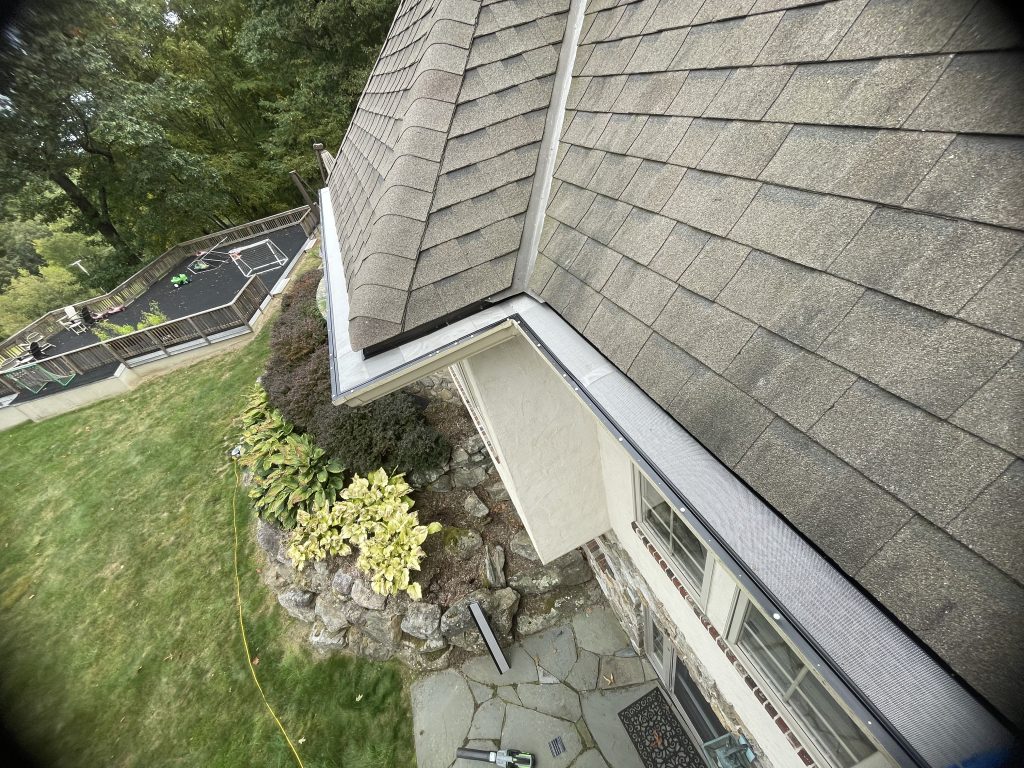

Hackettstown homeowners tend to notice gutter trouble only when water starts doing something dramatic. It spills over the front entry during a storm. It pours in sheets over a deck. It leaves a brown stain down the siding, or worse, it shows up in the basement a day after heavy rain. By that point, the problem has often been building for months.
Gutters do a simple job, but they protect some of the most expensive parts of a house. They catch roof runoff and send it away from the structure. When that path gets blocked by leaves, pine needles, seed pods, shingle grit, and the occasional bird nest, water stops behaving in a controlled way. It looks for easier routes. On homes in and around Hackettstown, where mature trees are common and weather shifts can be hard on exterior systems, that can create real damage surprisingly fast.
People sometimes assume clogged gutters are mostly a nuisance, the kind of maintenance issue that can wait until next season. In practice, they affect foundations, roofing, trim, insulation, masonry, and landscaping. They can even create winter hazards and pest issues. The cost gap between routine cleaning and repairing water damage is not small. In many cases, it is the difference between a modest service visit and several trades showing up over the course of a month.
Why Hackettstown homes are especially vulnerable
Hackettstown has a housing mix that makes gutter performance important. Older homes often have charming rooflines, deep eaves, and mature trees, all of which can increase the amount of debris entering the gutter system. Newer homes are not immune either. Many have longer gutter runs, buried drain extensions, and tight lot layouts that make drainage even more critical.
Seasonal patterns matter too. Fall tends to load gutters with leaves, twigs, and acorns. Winter can lock that debris in place with snow and ice. Spring brings heavy rain that tests every weak point in the drainage system. Summer growth adds seeds, helicopters, pollen buildup, and moss in shaded areas. It is not unusual to clean a gutter in late autumn and still find meaningful buildup by spring, especially on houses surrounded by maples or oaks.
A lot of homeowners are surprised by how little blockage it takes to cause overflow. Gutters do not have to be packed solid from end to end. A downspout clogged near the outlet can back up an entire run. A sagging section can hold standing water that traps more debris every time it rains. Once the pitch is compromised, the gutter starts collecting material faster than it sheds it.
That is one reason Gutter Cleaning Hackettstown services tend to be more than a cosmetic maintenance item. In this area, they are part of basic water management for the home.
What happens when water can’t leave the roofline
When gutters are working, most of the water you never think about stays harmless. During a moderate storm, even a modest roof can shed hundreds of gallons. During a hard rain, that volume rises fast. If gutters are clogged, all that runoff still has to go somewhere.
The first thing most people see is overflow at the outer edge. Water spills over the gutter lip and lands along the foundation. If the grade around the home is imperfect, and many are, that water starts pooling where it should not. Soil gets saturated, mulch washes out, and hydrostatic pressure can build against foundation walls. In finished basements, that can mean dampness, musty smells, or seepage along the cove joint where the floor meets the wall.
The second problem is less visible. Water can also back up behind the gutter. Instead of flowing outward, it can https://ziongran399.valiantfield.com/posts/gutter-cleaning-hackettstown-a-homeowner-s-essential-maintenance-guide wick under shingles and against the roof deck or fascia board. That kind of moisture exposure often goes unnoticed until paint peels, wood softens, or a section of trim starts to bow. On older homes with wood fascia, I have seen this happen even when the front of the gutter looked relatively normal from the ground.
There is also the issue of splashback. Overflowing water hits lower roof sections, windows, brick, stone veneer, and siding with more force than those surfaces are meant to handle repeatedly. Over time, that contributes to staining, mortar wear, mildew growth, and premature finish failure.
The hidden damage behind the fascia
Fascia boards sit right at the edge of the roof and support the gutter system. When gutters stay wet or hold debris for long stretches, the fascia becomes one of the first building materials to suffer. Water trapped in leaf sludge does not dry quickly. It sits against fasteners and wood fibers, creating the conditions for rot.
This matters because gutter problems and fascia problems feed each other. As the board weakens, fasteners loosen. As fasteners loosen, the gutter pulls away from the house. Once that gap opens, runoff starts slipping behind the gutter more easily, which accelerates the damage. Homeowners often notice the symptom, a small separation or a corner that looks crooked, without realizing that the wood behind it may already be compromised.
The repair is rarely just a matter of reattaching the loose section. If the substrate is rotten, a contractor may need to remove gutter sections, replace wood, prime and paint, then reinstall or replace the gutter. A maintenance issue that might have been handled with seasonal cleaning turns into carpentry, painting, and drainage work.
Soffits can be affected too. If water backs up under the roof edge, it can find vent openings or seams and wet the soffit material from above. In warm weather, that trapped moisture can attract insects. In cooler months, it simply lingers and degrades finishes.
Foundations, basements, and the slow cost of poor drainage
Foundation damage rarely announces itself with one dramatic event. More often, it develops through repeated wetting in the same areas. Every storm that dumps roof water beside the home instead of away from it increases the moisture load around the footing. If the soil is clay-heavy, expansion and contraction can make the problem worse. If there are preexisting cracks, water has a path. If there is a finished basement, the stakes are even higher.
Basement seepage often gets blamed on the foundation alone, but exterior drainage is a major part of the story. Before anyone starts talking about interior drains or sump upgrades, it makes sense to look up at the gutters and downspouts. A surprising number of wet basement complaints begin with clogged or disconnected roof drainage.
Around patios and walkways, runoff can also undermine hardscaping. Water pounding one corner of a slab or washing along an edge can erode the base beneath pavers or concrete. That is not instant damage, but over a few seasons it can create settlement, uneven surfaces, and trip hazards.
One homeowner may only see a little muddy trench in the flower bed. Another may notice the first faint water mark on a basement wall. Both are warning signs, and both are cheaper to address early.
Winter turns clogged gutters into a different kind of threat
In Hackettstown, winter changes the nature of gutter problems. Debris that might only cause messy overflow in October can contribute to ice formation in January. When gutters are blocked, melting snow from the upper roof cannot drain properly. It refreezes at the colder roof edge and inside the gutter channel, building ice where water should be flowing.
Ice is heavy. It strains hangers, bends aluminum, loosens spikes, and can pull entire sections away from the home. It also creates dangerous icicles and slippery walkways below. More importantly, ice dam conditions can force water backward under shingles. Once meltwater enters the roof assembly, damage can spread to insulation, ceilings, wall cavities, and interior finishes.
People often think ice dams are only an insulation or attic ventilation problem. Those factors matter, but clogged gutters make edge drainage worse. A clean, properly pitched gutter is not a cure-all for winter roof issues, yet a blocked one absolutely increases the chances of trouble.
I have seen houses where the gutter itself looked intact after winter, but spring inspection revealed lifted shingles, stained sheathing near the eaves, and interior paint bubbling along an exterior wall. The sequence started months earlier with leaves that were never removed before freeze-thaw cycles set in.
Pests like clogged gutters more than homeowners do
A neglected gutter system can become a habitat. Wet debris holds moisture and breaks down into a dense organic layer that attracts insects. Mosquitoes need very little standing water to breed. Carpenter ants are drawn to damp wood nearby. Birds may pull nesting material into corners. Rodents sometimes use overgrown rooflines and clogged gutters as part of a sheltered travel route.
Even when pests are not living in the gutter itself, the moisture and plant growth that come with neglect make the area more inviting. Seeds trapped in debris can sprout. Small weeds or volunteer tree seedlings sometimes take hold in the muck. At that point, the gutter is not just clogged, it is functioning like a planter attached to the eaves.
That buildup adds weight. Wet debris is much heavier than dry leaves. If enough accumulates, sections can sag or detach, especially on older fastener systems. The visual problem may seem minor from the ground, but the structural load on the gutter and fascia can be significant.
Siding, brick, and trim pay a price too
Overflow rarely falls in a neat vertical line. Wind pushes it sideways. It splashes onto siding. It rebounds onto windows and trim. Over time, painted wood can blister and peel. Vinyl can collect dirt streaks and algae. Brick can show mineral deposits. On homes with decorative trim details, repeated wetting tends to reveal itself first in the joints and corners where materials meet.
These are the kinds of problems that often get addressed cosmetically at first. A homeowner washes the siding, repaints a board, or caulks a seam. If the real cause is still overhead, the damage returns. It is frustrating and expensive because the visible symptom is being treated, not the water management failure behind it.
This is one reason exterior contractors often ask about gutter maintenance when they see premature paint failure or unusual staining. Water tends to leave clues, and those clues often point uphill.
Landscaping suffers more than people expect
Homeowners put real money into foundation plantings, mulch beds, edging, and lawn repair. Overflowing gutters can undo that work one storm at a time. Water concentrated at a roof corner scours mulch, exposes roots, compacts soil, and creates bare patches in turf. In sloped yards, it may carve channels that become harder to correct each season.
Tender shrubs under drip edges are especially vulnerable. They get battered physically, then sit in soil that swings between saturated and compacted. Decorative stone beds can wash out of place. Newly planted areas often suffer the most because roots are shallow and the soil has not settled.
The frustrating part is that homeowners may notice the landscape decline before they suspect the gutter. A hydrangea struggling near the front walk does not immediately suggest a downspout issue, but sometimes that is exactly what is happening.
Signs the system is already in trouble
Some warnings are obvious during rain, while others show up on dry days. If you see any of the following, the gutters deserve attention soon:
- Water spilling over the front edge during a normal rain
- Sagging sections or gaps between the gutter and fascia
- Plants growing from the gutter channel
- Stains on siding or dark streaks below the roofline
- Pooled water or erosion near downspout discharge areas
It is worth noting that not every problem points to debris alone. Poor pitch, undersized gutters, crushed downspouts, hidden underground clogs, and failing fasteners can all contribute. Still, debris accumulation is often the starting point or the factor that makes every other weakness more obvious.
Why “I’ll get to it later” gets expensive
Gutter maintenance is easy to postpone because the system usually fails gradually. The house does not stop functioning. The lights still turn on. The furnace still runs. Unless there is an active leak, the issue gets pushed down the list.
That delay is where costs multiply. A basic cleaning addresses debris before it holds water against wood, before overflow drenches the foundation line, and before winter freezes everything into place. Once secondary damage begins, the repair path branches. Now you may be dealing with roofing, carpentry, masonry, painting, waterproofing, or insulation concerns alongside the gutter problem.
There is also the safety factor. Homeowners sometimes wait until the gutters are badly clogged, then try to tackle the job in poor weather or with inadequate equipment. That is when falls happen. Single-story work carries risk. Two-story work is another level altogether. Steep grades, wet ground, and awkward rooflines make ladder work less forgiving than people expect.
Professional Gutter Cleaning Hackettstown companies are often called after a close call, or after a homeowner realizes the downspouts are packed solid and the ladder setup does not feel safe. That is usually a wise point to hand it off.
What good maintenance actually looks like
A proper gutter service is more than scooping out leaves. The debris needs to be removed fully, the downspouts checked for flow, and the system evaluated while it is accessible. A quick rinse that leaves compacted sludge in the outlets is not much help.
A thorough visit usually includes these steps:
- Remove debris from gutter channels and problem roof valleys
- Clear and flush downspouts to confirm drainage
- Check pitch, seams, corners, and fastener stability
- Note signs of fascia rot, overflow staining, or gutter separation
- Verify that discharge points carry water away from the home
Not every home needs the same schedule. A house with few nearby trees may only need annual service, while one tucked beneath mature maples may need attention twice a year or more. Screens and guards can reduce maintenance in some cases, but they are not magic. Fine debris still collects, and some guard designs make hidden blockages harder to spot. They help in the right setting, but they do not eliminate the need for inspection.
Choosing timing based on the house, not a generic calendar
There is no universal month that works for every property. Timing depends on tree cover, roof design, past overflow history, and whether the home sees heavy winter icing. That said, late fall cleaning is often important in wooded neighborhoods because it clears the system before freeze-thaw cycles begin. A spring check is also smart, especially after a winter with snow and ice.
If a property has pine trees overhead, debris may accumulate year-round. If downspouts connect to underground drains, periodic verification becomes more important because a clean gutter does little good if the discharge line is blocked farther down.
Homeowners should also pay attention after major storms. A single event can load a valley with branches or push shingle granules and leaf litter into an outlet. Even if the gutters were cleaned recently, one bad storm can change conditions fast.
The bigger picture for home protection
Clogged gutters are easy to underestimate because they sit at the edge of the roof, out of sight and mostly out of mind. Yet they influence how water interacts with nearly every part of the home’s exterior envelope. When they fail, the damage often appears somewhere else first, in the basement, on the siding, in the fascia, across the walkway, or along the landscape bed.
For Hackettstown homeowners, that makes gutter care less about housekeeping and more about preserving the building. A clean, functioning gutter system helps protect the roof edge, keeps water away from the foundation, reduces winter hazards, and limits the kind of slow moisture damage that leads to bigger repairs. The work itself is not glamorous, but the protection it provides is hard to overstate.
A house does not need perfect weatherproofing everywhere to stay sound. It needs its basic water control systems to keep doing their job. Gutters are one of those systems. When they clog, the house pays for it in places you might not connect at first. When they are maintained, a lot of expensive problems never get a chance to start.
Just Gutters LLC
Address: 262 Main St, Hackettstown, NJ 07840
Phone number: +12013319454
FAQ About Gutter Cleaning Hackettstown
How much should a gutter clean cost?
Professional gutter cleaning typically costs between $163 and $333, with a national average of around $210 to $250 for a standard-sized home.
What months should you clean gutters?
You should clean your gutters twice a year—once in late autumn (November to December) and once in late spring (April to May).
Is it worth paying for gutter cleaning?
Yes, paying for gutter cleaning is worth it because it prevents thousands of dollars in water damage, roof leaks, and structural repairs.